via S.Anna, 8- tel.+39.095/7150598 from Thuesday toSaturday 9.00 a.m /13.00 p.m-15.15 p.m /18.30 p.m - price 3 euro
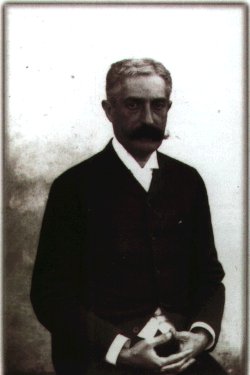
In a hidden road in the center of Catania, that links Via Vittorio Emanuele and Via Garibaldi, it is possibile to visit the house where Giovanni Verga lived for many years and where he died in1922. The nineteenth-century building he inherited from his mother became a national monument in 1940 and a house-museum managed by the regional government in 1991. Inside the main entrance is a long staircase leading to the writer’s apartment; the rooms follow one after the other, rendering the sequences of the visit easily understood. Beyond the entrance hall where a museum employee or a caretaker will offer to be your guide is the large sitting room, today arranged with four display cases containing reproductions of Verga’s manuscripts. In a corner is a bust of the writer by the sculptor Bruno. In a wooden case is the wax mask of his father, Giovan Battista Verga Catalano. The most important room is the library with a table at its centre full of personal effects. Along the walls there are six bookcases that hold more than 2,500 books that belonged to the writer; there are many works by Italian and foreign writers. The next room is the bedroom furnished simply with a bed, a wardrobe that still contains some clothes, a piece of furniture with a mirror, two armchairs next to a fireplace. Portraits and photographs of the Verga family hang on the walls. The other rooms are all furnished in sober taste- beds, chairs and old prints on the walls. The final room, which opens out onto the entrance hall, is a small dining room in which the writer had a functional dumb waiter installed, connected to the kitchen on the floor above.
Giovanni Verga
Giovanni Verga was born in Catania on 2 September 1840 ( the exact date and place are uncertain). In 1854, due to an outbreak of cholera, the family moved to their land in Vizzini where Verga met a young novice nun who was probably the inspiration for Storia di una capinera. He registered to study law at univesity but in 1861 abandoned his studies to concentrate on literary activity. In 1886 he published Una peccatrice and 1871, following its initial publication in episodes in a woman’s magazine, Storia di una capinera was published in volume. In 1873 Eva was published and in1874 Nedda, Bozzetto Siciliano appeared in the “Rivista Italiana di Scienze, Lettere ed Arti”. In 1875 the novels Tigre Reale e Eros were published. In 1878 Verga made plans to create a cycle of five novels with the title Marea (Tide), later rebaptized I Vinti ( The Vanquished). In 1880 Vita dei Campi, a collection of novel I Malavoglia ; in 1882 the novel Il marito di Elena.
In 1883 Novelle rusticane and the following year Eleonora Duse brought Cavalleria rusticana to the stage. In 1889 the definitive version of Mastro-don Gesualdo was published; in 1890 the opera of Cavalleria rusticana with a libretto by G. Targioni- Tozzetti and music by Pietro Mascagni. From 1893 until his death (1922) Giovanni Verga lived in Catania in the family building in Via Sant’Anna.
copyright Giuseppe Maimone Publisher